The American Oystercatcher: Cape Cod's Boldest Shorebird
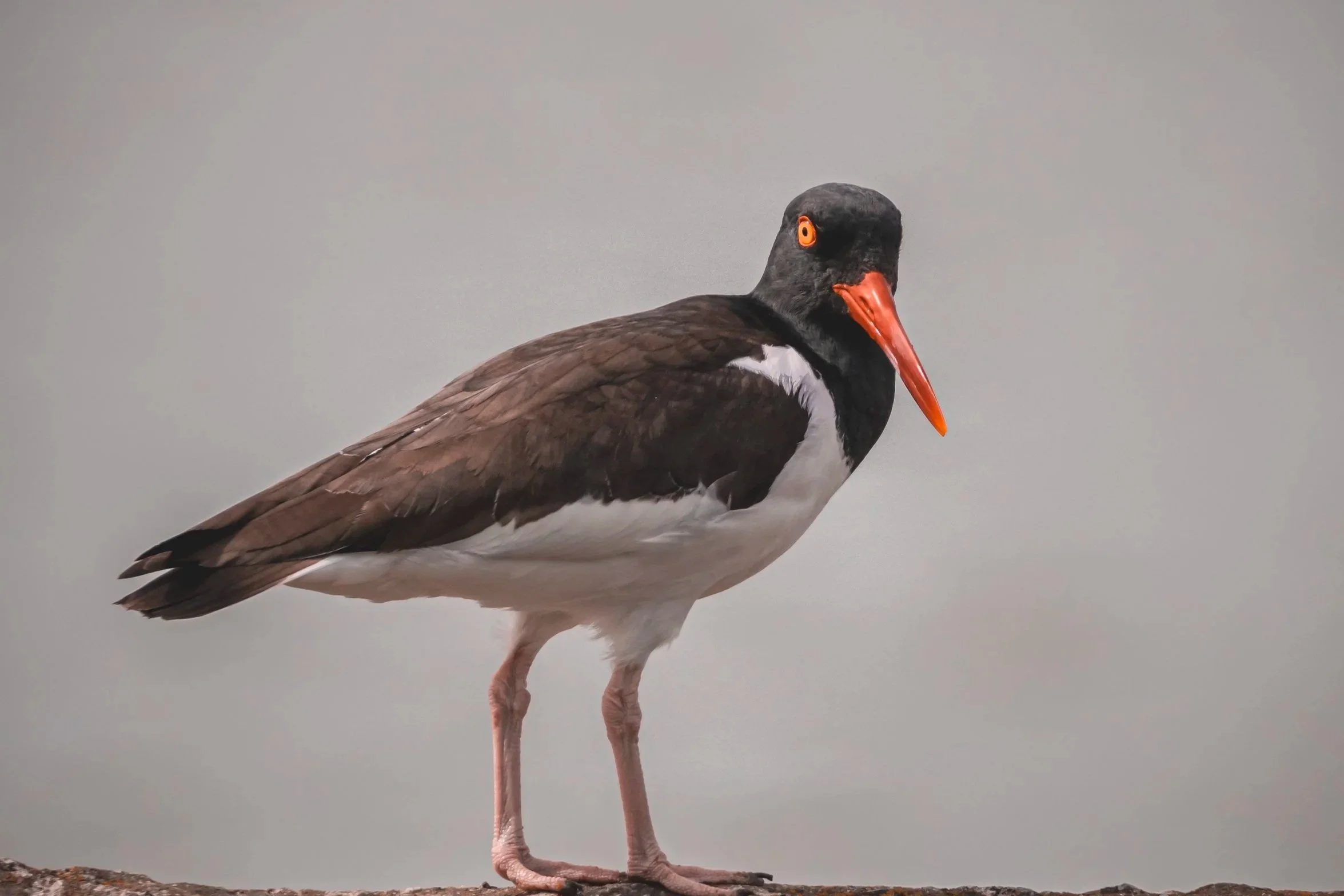
Photo: American oystercatcher. Cape Cod is the northernmost regular breeding site for this species on the Atlantic Coast, and conservation efforts on the Outer Cape have been instrumental in its recovery.
The Packet Boat | Wellfleet, Cape Cod
You'll hear it before you see it — a sharp, piercing kleep! cutting across the tidal flats. Then that unmistakable flash of orange. The American oystercatcher is one of the most striking shorebirds on Cape Cod, and summer on the Outer Cape is the best time to spot one.
A Bird Built for the Flats
With its jet-black head, bright red-orange bill, and bold black-and-white body, the American oystercatcher looks nothing like the subtle sandpipers and plovers it shares the beach with. At nearly two feet long with a 35-inch wingspan, it's also one of the largest shorebirds you'll encounter between Wellfleet Harbor and Provincetown.
That heavy, blade-like bill isn't just for show. Oystercatchers use it to pry open mussels, clams, and oysters along the intertidal zone — either jabbing it between open shells to sever the adductor muscle or simply hammering through the shell itself. It's one of the few shorebirds that has essentially made a career out of eating bivalves.
A Conservation Comeback on the Outer Cape
The American oystercatcher was nearly wiped out in Massachusetts by the early 1900s, driven to local extinction by market hunters and egg collectors. For close to a century, the species was absent from our coastline entirely.
But they came back. Cape Cod and the Islands — especially Nantucket, Tuckernuck, and the Outer Cape — are now the northern edge of the oystercatcher's breeding range along the Atlantic Coast. Conservation efforts led by Mass Audubon, the National Park Service, and the American Oystercatcher Working Group have helped drive a significant recovery statewide. It's one of the real success stories in Cape Cod shorebird conservation, alongside the piping plover and least tern.
Where to Look from the Water
The best way to see oystercatchers on the Outer Cape is from the water. They feed along tidal flats, mudflats, and exposed shellfish beds — habitat that's often difficult to reach on foot but opens up beautifully from a boat in Wellfleet Harbor and the surrounding bays.
Spring and summer are prime time. Breeding pairs return to the Outer Cape by late March and nest in shallow scrapes on sandy beaches and marsh islands through July. Look for them standing alert on exposed bars at low tide, or listen for their rapid-fire calls echoing across the flats.
About The Packet Boat
The Packet Boat operates out of Wellfleet on Cape Cod's Outer Cape, offering boat tours through some of the most productive shorebird habitat on the Atlantic Coast. Whether you're a birder, a photographer, or just someone who wants to see Cape Cod from the water, there's no better vantage point than the deck of a boat at low tide in Wellfleet Harbor.
Book a trip at https://www.thepacketboat.com