Osprey in Wellfleet Harbor: What We See from the Water
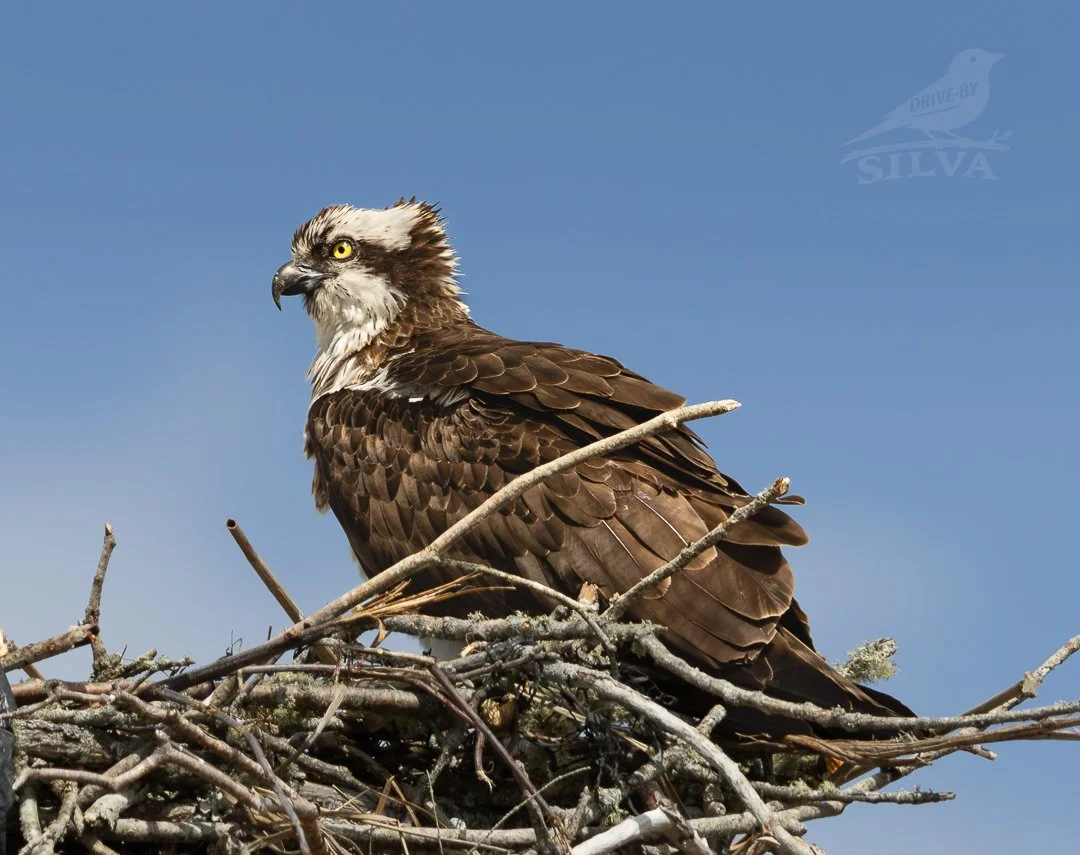
The osprey are back.
Every year, sometime in the last weeks of March, the first osprey return to Wellfleet Harbor. They arrive from Central and South America — some from as far as Venezuela — and find their way back to the same nests they left the previous September. It is one of the most reliable rhythms on the Outer Cape. When the osprey appear, the season is turning.
From the water, you notice them differently than you would from shore. An osprey circling over the harbor is easy to spot from a boat — the wingspan reaches nearly six feet, and in flight the wings hold a distinctive bend that forms an M-shaped silhouette against the sky. But what you really learn, spending time on the harbor day after day, is where they go and why.
The Nests
Wellfleet Harbor has several active osprey nesting sites, including the well-known nest on the pole near the town pier and platforms maintained by Mass Audubon's Wellfleet Bay Wildlife Sanctuary and local power companies. Osprey return to the same nest each year, adding material until the structure can weigh several hundred pounds. A nest that has been used for years becomes enormous — visible from well out in the harbor.
The nesting platforms exist for a reason. Osprey will build on utility poles, cell towers, and any elevated structure near water. The platforms give them a safer alternative, and they have been a quiet but important part of the species' recovery on Cape Cod. In the 1970s, only one or two nesting pairs remained in the region, the population devastated by DDT. Today, hundreds of pairs nest across the Cape — a recovery that still feels remarkable when you watch a pair tending their nest in the same harbor where the species nearly disappeared.
How They Hunt
Osprey feed almost exclusively on fish. Their hunting is deliberate — they fly slowly over the shallows, hover when something catches their attention, then fold and dive. The talons are built for it: long, curved, with rough pads for gripping, and an outer toe that reverses so they can hold a fish with two toes on each side. After a successful dive, they carry the fish headfirst, streamlined for the flight back to the nest.
In Wellfleet Harbor, the timing of osprey hunting follows the tide. When the water drops and fish concentrate in the shallows and channels, the hunting picks up. From a boat, you can often read the tide by watching where the osprey are working. Their presence over a particular stretch of water tells you something about what is happening beneath the surface — where the bait is moving, where the current is pushing, where the harbor is most alive in that moment.
The herring runs matter too. Osprey on Cape Cod time their nesting to coincide with the arrival of river herring in spring, and pairs that nest near a reliable herring run have a real advantage. Early-nesting pairs tend to have better reproductive success, likely because their chicks hatch when food is most abundant.
What We Watch For
From late March through September, osprey are a constant presence on the harbor. The season follows a pattern: arrival and nest repair in late March and early April, egg-laying in April, incubation through May, chicks in June and July, fledging in August, and departure by late September.
Each stage looks different from the water. Early in the season, you see pairs circling together and carrying sticks to the nest. By midsummer, the adults are making constant fishing runs to feed growing chicks. Late in the season, you can sometimes watch a young osprey making its first uncertain flights over the harbor — awkward, determined, and unmistakable.
The best time to observe osprey from a boat is during the morning hours, when the harbor is calm, the light is low, and the birds are actively hunting. Sunrise crossings, in particular, put you on the water during that first window of activity when the osprey, the herons, and the shorebirds are all working the same flats.
A Harbor Shaped by Birds
There is something clarifying about watching osprey from below — from their working level, where the water meets the air. You are not looking at a bird on a pole. You are watching a predator read the same water you are moving through, responding to the same tides and conditions. It connects you to the harbor in a way that standing on the pier does not.
The osprey do not perform. They work. And if you are patient and quiet, the harbor shows you what that work looks like — the slow circles, the sudden pause, the dive, the heavy wingbeats back to the nest with a fish still flexing in the talons. No two passes are the same.
This is what a morning on Wellfleet Harbor sounds like when the season opens: wind in the cord grass, water against the hull, and somewhere above you, the high whistle of an osprey returning to a nest it has known for years.
The Packet Boat offers sunrise Bird Watchers Crossings and other harbor crossings from Wellfleet Town Pier, beginning May 1st. To book a crossing, visit our schedule or contact us at (774) 722-8339.