Dunlins at Jeremy Point, at Sunset
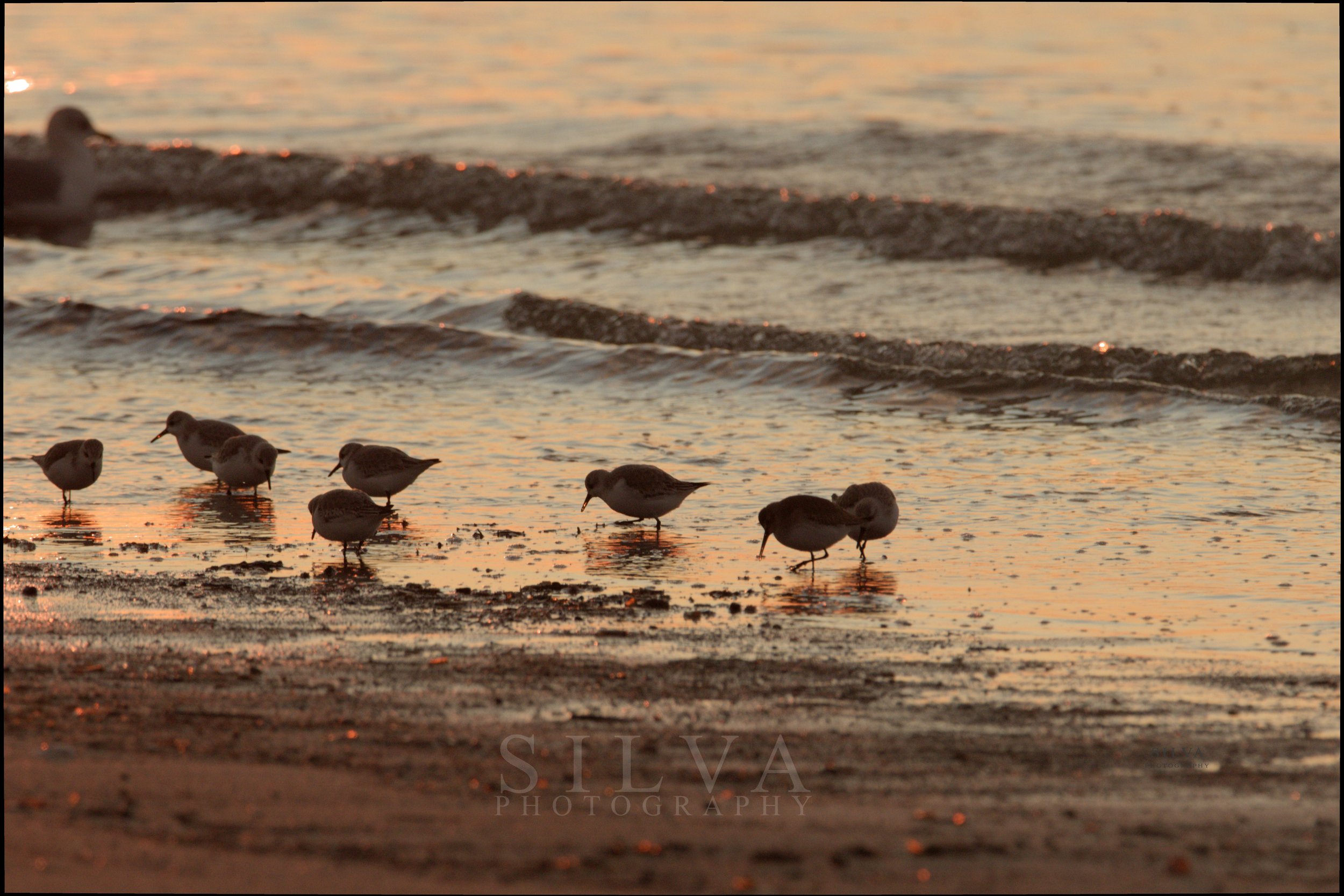
Dunlins feeding along the flats at Jeremy Point near sunset.
The light was low and warm, settling into Wellfleet Harbor as the sun dropped toward the horizon. At sunset, the water flattens just enough to turn reflections into color rather than glare. The tide was easing out, leaving a thin band of wet sand where the harbor briefly pauses between movements.
A small group of Dunlins worked along the edge, spaced just far enough apart to avoid each other, close enough to share the same strip of exposed ground. Dunlins are migratory shorebirds commonly seen along Cape Cod during spring and fall, and they feed by probing wet sand and mudflats at low tide, often moving in tight groups along the water’s edge as conditions change. Their rhythm here was quiet and practiced — less like feeding, more like reading the surface.
At Jeremy Point, these moments don’t announce themselves. They appear when the water drops to a certain level, when the wind stays light, when the sunset light reaches the flats without overpowering them. Miss any one of those and the scene doesn’t exist.
Watching Dunlins here often reveals more than watching the channel markers. Where they gather tells you where the sand has risen. Where they hesitate tells you where the water still holds. Their paths trace the shape of the harbor as it actually is, not as it was last season.
This was one of those evenings that makes you stop mid-crossing — not because something dramatic is happening, but because everything is briefly aligned. The tide, the light, the birds, and the harbor all moving at the same quiet pace.
By the time the sun slipped below the horizon, the Dunlins had already shifted farther out along the flats. The moment closed without ceremony, leaving only the impression that something had passed through.