Looking for a Wellfleet Oyster Tour? A Guide to Oyster Farms, Shellfish Grants & Wellfleet Harbor
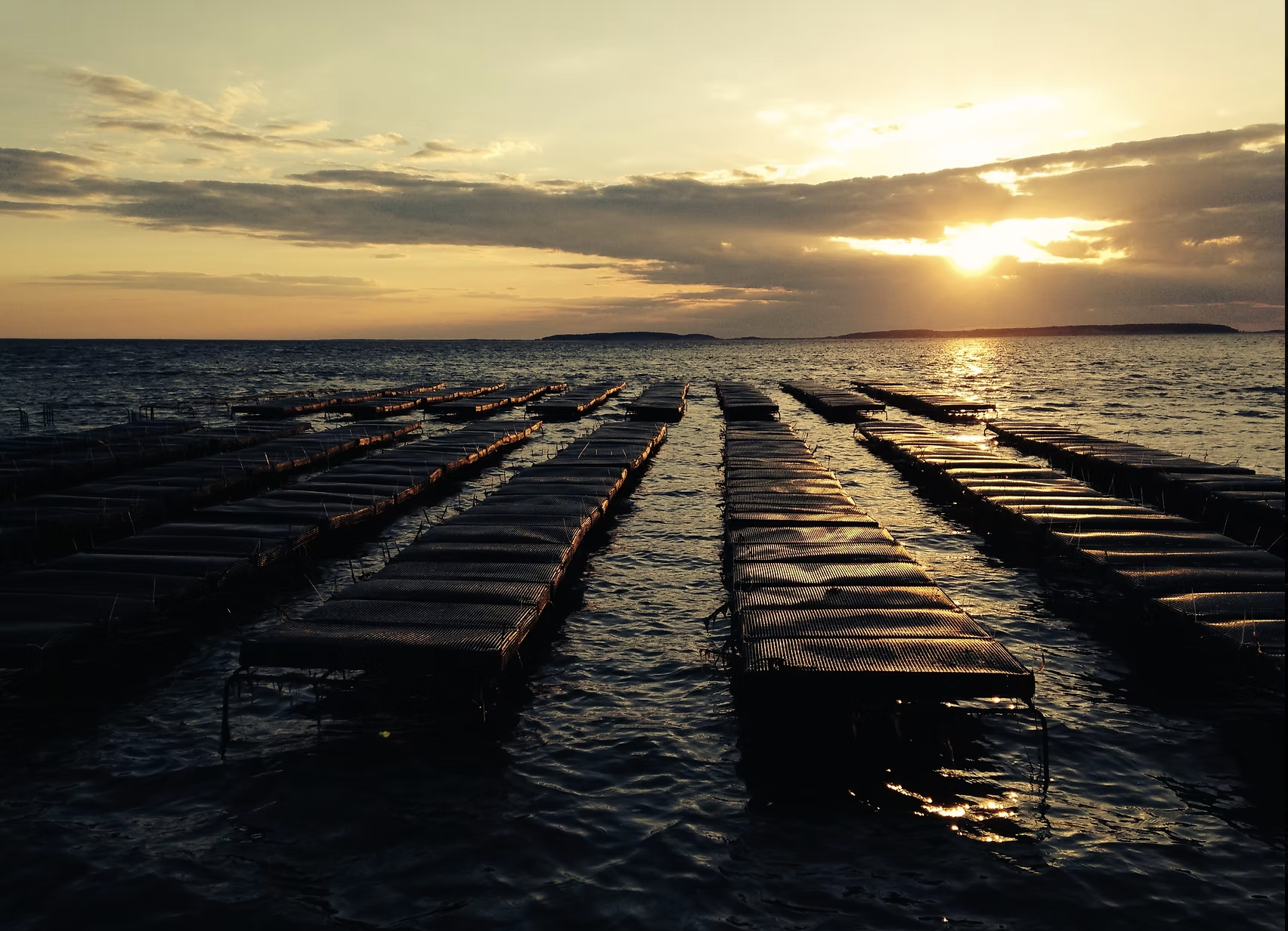
Search for a Wellfleet oyster tour and you quickly discover something important: oysters here are not just a food served at restaurants or a summer attraction.
They are part of the landscape.
Wellfleet's oyster farms, shellfish grants, tidal flats, working boats, growers, and shellfishermen are woven into the life of Wellfleet Harbor. To understand why Wellfleet oysters have become so closely identified with Cape Cod, it helps to begin with the harbor itself.
The Packet Boat does not operate a dedicated oyster farm tour, and we do not serve oysters aboard our trips.
Our boat tours explore the larger Wellfleet Harbor environment in which the town's shellfishing tradition exists: the tidal flats, working waterfront, wildlife, changing channels, Cape Cod Bay, and the areas where shellfish cultivation has long been part of life on the water.
If you're researching Wellfleet oyster tours, Wellfleet oyster farms, Cape Cod oyster tours, or things to do around Wellfleet Harbor, here's what you're actually looking at.
Why Is Wellfleet Famous for Oysters?
Wellfleet and oysters have been associated with one another for centuries.
When French explorer Samuel de Champlain visited the area in 1606, the abundance of oysters was notable enough that he referred to the harbor as an oyster port. Long before European arrival, however, shellfish were already an important resource for Indigenous people living around the harbor. The oyster eventually became deeply tied to Wellfleet's commercial and cultural identity.
That connection continues today.
The Town of Wellfleet Shellfish Department identifies oysters, quahogs, soft-shell clams and bay scallops among the shellfish commonly found in local waters.
So when people talk about Wellfleet oysters, they are talking about much more than something on a raw-bar menu.
They are talking about a living working harbor.
What Are the Oyster Farms in Wellfleet Harbor?
Many visitors see activity on the flats and assume every shellfish area is simply a natural oyster bed.
It is more complicated than that.
Wellfleet Harbor contains commercial aquaculture areas where shellfish growers cultivate oysters and other shellfish. The Wellfleet Oyster Alliance says there are more than 100 aquaculture operations working in local waters.
Depending on the tide and where you are in the harbor, you may notice gear, racks, bags, buoys, boats, or people working on exposed flats.
Those are not decorations put there for visitors.
They are part of a working industry.
And that is an important distinction when seeing Wellfleet oyster farms from the water.
The harbor is not an oyster-themed attraction.
It is a place where people actually work.
What Is a Wellfleet Shellfish Grant?
You'll often hear people around town refer to an oyster grant or shellfish grant.
A shellfish grant is an area used for aquaculture under local regulation. Wellfleet's shellfish industry includes individually managed grant areas in different parts of the harbor, and the town handles matters such as licensing and transfers through its Shellfish Department.
This is one reason the harbor can look so different at low tide.
When the water recedes, parts of the working shellfish landscape that were hidden several hours earlier become visible.
The flats open.
Channels narrow.
Growers appear farther from what looked like the shoreline at high tide.
And suddenly the geography of oyster farming makes much more sense.
Why Does the Tide Matter So Much to Wellfleet Oyster Farming?
You cannot really understand Wellfleet Harbor oysters without understanding the tide.
Wellfleet Harbor is a tidal environment.
As the tide falls, extensive areas of flats are exposed. At other stages of the tide, those same areas disappear beneath the water.
For shellfishermen and aquaculture growers, that changing water level is part of the working day.
For visitors, it means Wellfleet Harbor can look like two completely different places only a few hours apart.
At high water, the harbor may appear broad and uninterrupted.
At low water, its structure reveals itself.
Flats, bars, channels, shellfish grounds and working areas become much easier to distinguish.
That is one reason seeing Wellfleet Harbor by boat gives you a different perspective than seeing it only from Commercial Street or the Town Pier.
You begin to understand how the water connects the pieces.
Can You Visit an Oyster Farm in Wellfleet?
Yes.
If what you specifically want is a hands-on Wellfleet oyster farm tour, there are organizations offering that experience.
The Wellfleet Oyster Alliance currently organizes seasonal shellfish farm visits on the flats. Their tours are low-tide walking experiences designed to give visitors a close look at how local shellfish are grown and harvested.
That is the type of experience to choose if your main goal is to walk onto a working farm and concentrate specifically on aquaculture.
It is different from taking a general Wellfleet Harbor boat tour.
And we think that distinction is worth making clearly.
What Is a Wellfleet Oyster Boat Tour?
There are also private boat operators in Wellfleet that specialize specifically in oysters, including trips that visit the harbor and serve freshly shucked local oysters aboard.
That is not what The Packet Boat does.
Our focus is the harbor as a whole.
On a Packet Boat trip, the story may include shellfish grounds because they are part of the place we're traveling through. But it may also include seals, shorebirds, changing tides, Great Island, Cape Cod Bay, the working waterfront, local history, weather, and whatever else the harbor happens to show us that day.
There is no oyster tasting aboard.
There is no staged oyster demonstration.
There is no claim that you're taking an oyster-farm tour.
Instead, you're seeing Wellfleet Harbor from the water.
Seeing Wellfleet's Oyster Country from a Boat
One of the advantages of going onto the harbor is perspective.
From land, you tend to see individual pieces.
The pier.
A shellfishing boat.
A distant flat.
A line of buoys.
Someone working at low tide.
From the water, those pieces begin to connect.
You can see why certain areas dry out while others remain navigable. You can see where working shellfish areas fit into the wider harbor. You see the distance between the Town Pier, the flats, Great Island and the open water of Cape Cod Bay.
And you begin to understand why oysters belong to Wellfleet geographically, not simply culturally.
This is a harbor built around tides.
Oysters happen to be very much at home here.
What Are Those Racks, Bags and Buoys in Wellfleet Harbor?
Visitors commonly notice aquaculture equipment without knowing what it is.
The Town of Wellfleet notes that aquaculture areas can be marked by buoys, and oyster-growing methods may include elevated racks and other equipment used to contain and protect growing shellfish.
The exact appearance changes from place to place and grower to grower.
That is another reason not to treat every structure on the flats as though it represents the same thing.
Aquaculture is farming.
Different growers use different methods, different sites have different characteristics, and conditions change with tide, weather and season.
What looks quiet from a distance may be somebody's workplace.
Are Wellfleet Oysters Wild or Farmed?
Both wild shellfish harvesting and aquaculture have histories in Wellfleet.
Modern shellfish cultivation is a major part of the local industry, but shellfishing in the harbor is not limited to cultivated oysters. The town also manages recreational shellfishing, with permits, open areas, size requirements and other regulations.
That distinction matters.
Shellfishing, oyster farming and oyster tours are related, but they are not the same thing.
Once you understand that, the harbor becomes considerably more interesting.
When Is the Best Time to See the Wellfleet Oyster Flats?
If your goal is specifically to see exposed flats and understand the physical layout of Wellfleet Harbor's shellfish grounds, lower stages of the tide generally reveal more of the landscape.
At higher water, much of that geography disappears.
Neither is necessarily better for a boat trip.
They are simply different versions of the harbor.
A high-tide trip can give the harbor a broad, open character.
A lower-tide trip can make the channels, bars and exposed flats much more obvious.
Because the tide changes every day, there isn't one permanent view.
That's one of the reasons we keep returning to this harbor.
Are Oyster Tours Good for Kids?
For families specifically interested in how food is grown, a dedicated Wellfleet oyster farm tour can be an interesting way to learn about aquaculture.
A harbor boat trip offers a broader experience.
Children may be more interested in a seal that surfaces beside the boat, a bird working along the flats, another vessel heading through the channel, or simply being out on the water.
There does not need to be one prescribed lesson.
Wellfleet Harbor supplies plenty of its own.
Where Can You Eat Wellfleet Oysters?
Seeing where oysters come from and eating them are two different pleasures.
Wellfleet has a long-established food culture surrounding local shellfish, and oysters appear throughout the town during the summer season.
The biggest celebration is Wellfleet OysterFest, organized by the Wellfleet Oyster Alliance. The 2026 festival is scheduled for October 17 and 18 and celebrates Wellfleet-raised shellfish, growers, food, arts and the annual Oyster Shuck-Off.
For visitors genuinely interested in oysters, combining the working-harbor story with the restaurants, growers and events around town gives a much more complete picture than thinking of an oyster simply as something served on ice.
Looking for a Cape Cod Oyster Tour?
Wellfleet is a natural place to begin.
Cape Cod has a significant shellfish aquaculture industry, and oysters are cultivated in communities around the Cape. Barnstable County recently installed educational aquaculture signs at locations across Cape Cod to help visitors better understand the industry and the people behind it.
But Wellfleet's relationship with oysters is unusually visible.
Here, the harbor, town history, working waterfront and shellfish culture sit very close together.
That makes Wellfleet worth visiting even if you never eat an oyster.
So Which Wellfleet Oyster Experience Should You Choose?
It depends on what you actually want.
If you want to walk onto an oyster farm and learn specifically about shellfish cultivation, look for a dedicated Wellfleet shellfish farm tour.
If you want a boat trip centered around oysters and eating oysters aboard, choose an operator that specifically offers that experience.
If you want to experience Wellfleet Harbor itself from the water, including the tidal landscape in which shellfishing, wildlife and maritime life coexist, that is where The Packet Boat fits.
We would rather make that distinction clearly than call every trip past an oyster grant an “oyster tour.”
The Oyster Is Part of a Much Bigger Harbor
There is a temptation when visiting Cape Cod to reduce places to the thing they are famous for.
Provincetown has its monument.
Chatham has its lighthouse.
Wellfleet has its oysters.
But the oyster makes considerably more sense once you see the place that produced it.
The tides matter.
The flats matter.
The protected harbor matters.
The people who work on it matter.
And the connection between town and water matters.
So if you found this page because you searched for a Wellfleet oyster tour, that's a good place to start.
Go see an oyster farm if that is what interests you.
Eat the oysters.
Talk to the people who grow and harvest them.
And then, if you want to understand the larger place they come from, get out on Wellfleet Harbor.
Because the oyster is part of the story.
The harbor is the story.