The Herring River Restoration Project: Bringing the Tides Back to Wellfleet
For more than a century, the tides that once flowed naturally through the Herring River were held back by a dike.
Today, those tides are slowly returning.
The Herring River Restoration Project is restoring natural tidal flow to approximately 1,100 acres of estuary stretching through Wellfleet and Truro. It is one of the largest ecological restoration projects ever undertaken in New England and represents decades of planning, scientific research, and collaboration among local, state, and federal partners.
Although much of the work takes place inland from Wellfleet Harbor, its effects extend throughout the harbor and Cape Cod Bay.
A River Changed in 1909
In 1909, a dike and tide gates were built at Chequessett Neck Road.
The project reflected the priorities of its time. Restricting saltwater was intended to reduce mosquito habitat and reclaim wetlands for agriculture and development. While the dike achieved those goals, it also cut off the twice-daily tidal exchange that had shaped the Herring River for thousands of years.
Over time, one of Cape Cod's largest salt marshes gradually became a degraded freshwater wetland.
Without regular tides, wetland soils began breaking down. Sulfuric acid formed, aluminum leached into the water, dissolved oxygen dropped, and fish kills became increasingly common. River herring populations declined dramatically, and poor water circulation contributed to bacterial contamination that periodically closed productive shellfish beds in Wellfleet Harbor.
Restoring the Tide
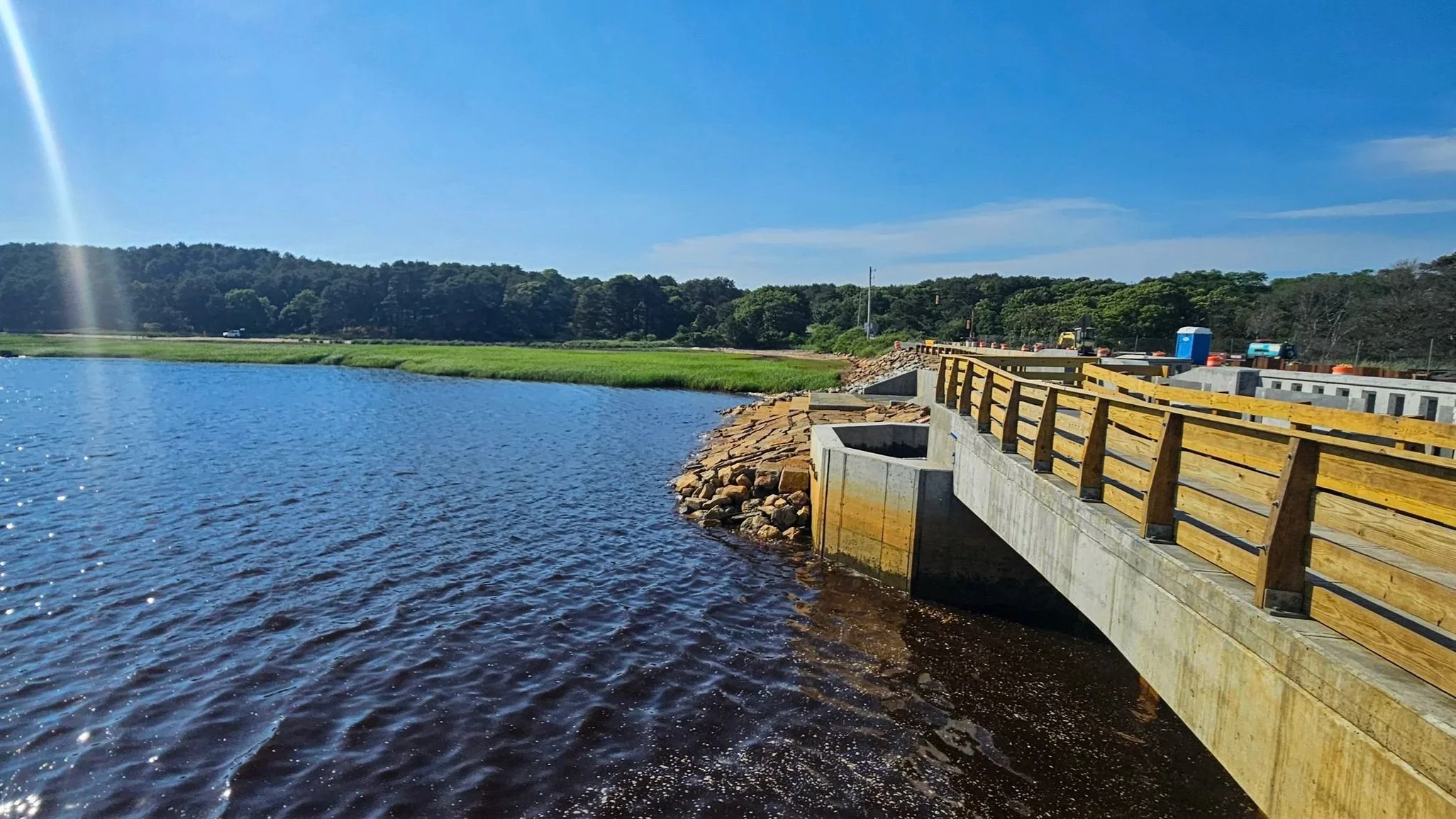
Rather than simply removing the old dike, engineers designed a modern bridge and active water control structure that allows tidal flow to return gradually.
In March 2025, tidal exchange was successfully transferred from the original dike culverts to the new bridge structure.
The restoration is being managed carefully.
Engineers continually adjust the tidal gates, allowing the highest practical tides while protecting nearby roads, homes, utilities, and other infrastructure from flooding. This adaptive approach allows scientists to monitor how the marsh responds before introducing additional tidal range.
A Salt Marsh Returning
Salt marshes are among the most productive ecosystems on Earth.
As saltwater slowly returns to the Herring River, freshwater vegetation is expected to give way to native marsh plants such as smooth cordgrass. Over time, the rebuilding of peat soils will strengthen the marsh's ability to absorb storm surge, store carbon, and provide habitat for wildlife.
Restoration on this scale happens gradually. Some changes will be noticeable within a few years, while others may take decades.
Why It Matters to Wellfleet Harbor
The Herring River ultimately drains into Wellfleet Harbor, making the health of one closely connected to the other.
Returning oxygen-rich seawater is expected to improve water quality throughout the estuary by increasing dissolved oxygen, reducing acidity, and diluting bacteria concentrations.
Healthier water benefits shellfish, fish, birds, and the people who depend on them.
One long-term goal is reducing conditions that have contributed to shellfish bed closures within Wellfleet Harbor, while restoring habitat that supports commercial fisheries and recreational fishing alike.
Wildlife Returns
The restoration is designed to reconnect migration routes used by river herring and other diadromous fish that move between fresh and salt water.
As fish populations recover, they provide food for ospreys, herons, egrets, cormorants, seals, and many other species found around Wellfleet Harbor.
The expanding salt marsh will also improve habitat for marsh birds, shellfish, and the region's small population of diamondback terrapins.
Like the marsh itself, these ecological changes will unfold over many years.
Seeing Change from the Water
For those who spend time on Wellfleet Harbor, restoration is not just a construction project—it is a long-term transformation of the landscape.
Each season brings small changes that may go unnoticed at first: healthier marsh vegetation, clearer water, more feeding birds, or larger schools of fish moving through the harbor.
Because the project is designed to evolve gradually, the story of the Herring River will continue to be written for decades to come.
Interested in seeing the Herring River and Wellfleet Harbor from the water? The Herring River can be included as part of a private custom tour, where we can explore the harbor at your pace while discussing its wildlife, history, and the ongoing restoration project.