Jeremy Point: A Complete Guide from the Water
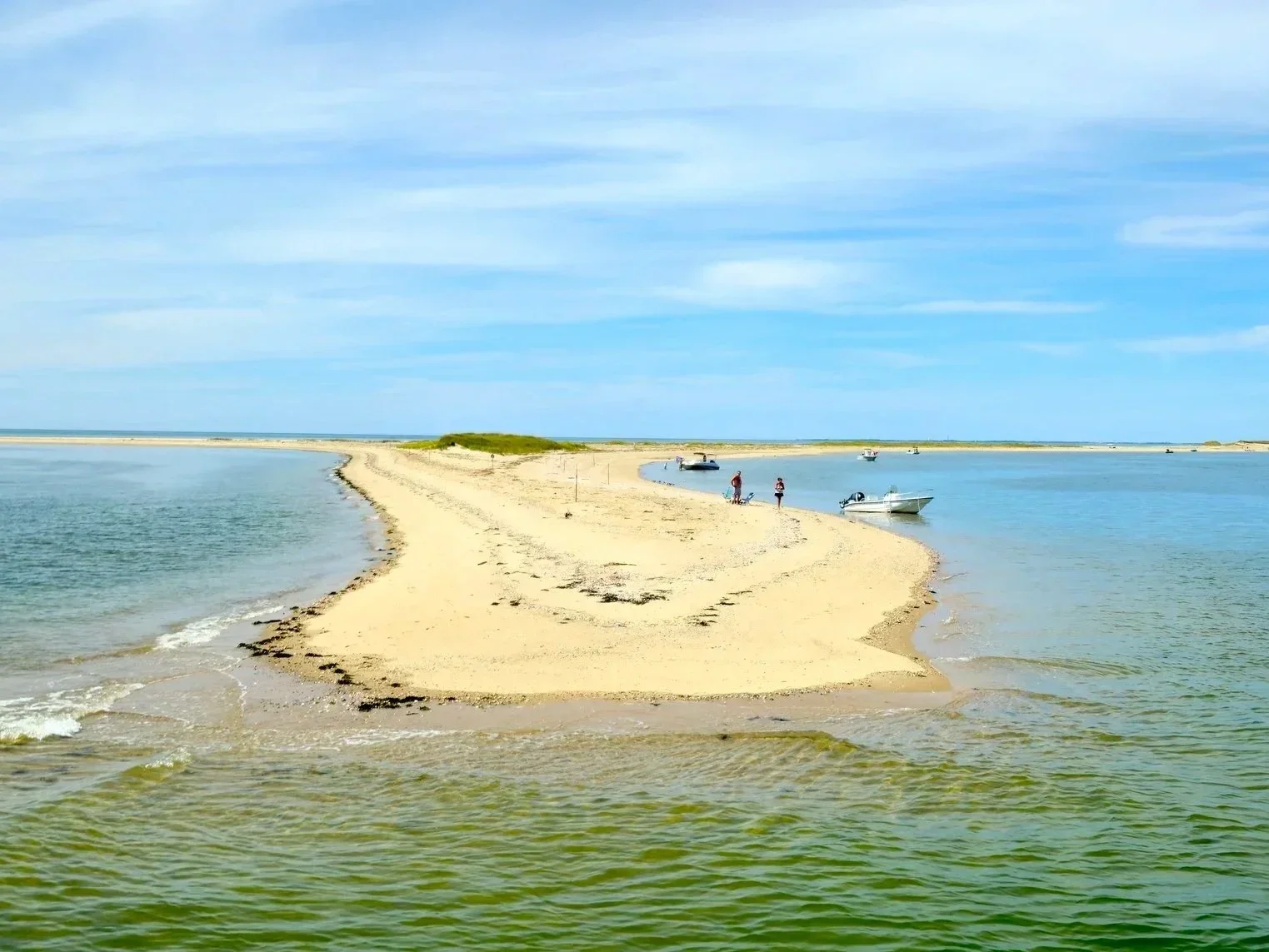
Few places capture the character of Wellfleet Harbor better than Jeremy Point.
Stretching into Cape Cod Bay along the western edge of the harbor, Jeremy Point is less a fixed destination than a landscape continually reshaped by the tide. At high water, its sandy shoreline is bordered by deep channels where boats move quietly past. Six hours later, broad tidal flats emerge, revealing rippled sand, winding creeks, and feeding grounds for thousands of shorebirds.
From land, Jeremy Point is known as a beautiful beach and the western end of Great Island. From the water, it becomes something much larger—a meeting place of tides, wildlife, history, and some of the Outer Cape's most remarkable scenery.
Where Is Jeremy Point?
Jeremy Point forms the western shoreline of Wellfleet Harbor and marks the northern end of Great Island. Facing Cape Cod Bay, it sits opposite Billingsgate Shoal and overlooks one of the most productive estuaries in New England.
Its position makes it one of the defining landmarks for anyone navigating the harbor. Whether arriving from Wellfleet Town Pier or crossing the bay from Billingsgate Shoal, Jeremy Point is almost always in view.
A Landscape Shaped by the Tide
The first thing every visitor notices is how dramatically Jeremy Point changes.
At high tide, the water reaches the base of the dunes and boats glide across channels that appear permanent. As the tide falls, those same waters retreat hundreds of yards, exposing broad sand flats textured with ripples, shell fragments, and winding channels carved by the current.
The transformation happens twice each day.
For wildlife, these changing tides expose rich feeding grounds. For boaters, they demand attention and local knowledge. Even experienced mariners navigate carefully, as channels shift subtly over time and yesterday's route may not be tomorrow's.
The changing tide is part of what makes Wellfleet Harbor feel alive. No two visits are exactly alike.
Wildlife Along Jeremy Point
Jeremy Point is one of the best places in Wellfleet to observe coastal wildlife.
During spring and summer, American oystercatchers patrol the shoreline with their unmistakable bright orange bills. Least terns and common terns dive for small fish offshore, while osprey circle overhead carrying menhaden back to nearby nests.
As summer turns toward fall, migrating sandpipers, semipalmated plovers, dunlins, and yellowlegs gather on the exposed flats, taking advantage of the abundant marine life uncovered by each falling tide.
Farther offshore, gray seals are often seen resting on Billingsgate Shoal or surfacing quietly in the harbor's deeper channels.
Because much of Jeremy Point remains relatively undeveloped, it continues to provide important habitat for both resident and migratory species throughout the year.
Jeremy Point from a Boat
Viewing Jeremy Point from the water offers a perspective few visitors experience.
Instead of looking toward the bay, you look back across Wellfleet Harbor toward the village, the oyster grants, and the winding tidal creeks that define the harbor's landscape.
On calm mornings, the water reflects the dunes almost perfectly. In the evening, the western sky often glows over Cape Cod Bay, casting warm light across the sand flats as the tide slowly returns.
It is a quieter view of the Outer Cape—one without roads, crowds, or parking lots.
A Place with Deep History
Long before it became a destination for walkers, birders, and boaters, this shoreline formed part of the homeland of the Wampanoag people, whose lives were closely connected to the harbor's abundant shellfish, fish, and seasonal wildlife.
European settlers later depended on these same waters for fishing, oystering, and coastal trade. Nearby Billingsgate Island once supported a thriving village before decades of erosion gradually claimed both the settlement and its lighthouse.
Jeremy Point remains one of the places where that maritime history is easiest to imagine. Standing offshore, it is possible to appreciate how generations of mariners have navigated these same tides and shifting sands.
Visiting Responsibly
Jeremy Point's beauty depends on careful stewardship.
Shorebirds nest directly on open sand during the spring and summer months, making it important to respect posted closures and avoid disturbing nesting areas.
Visitors arriving by boat should also be mindful of changing tides, shallow water, and sensitive shellfish habitat. Giving wildlife plenty of space helps ensure that seals continue resting undisturbed and birds can feed naturally along the shoreline.
A Captain's Note
One of the pleasures of running a boat in Wellfleet Harbor is knowing that Jeremy Point never tells exactly the same story twice.
Some mornings, the tide covers nearly every sandbar, and the harbor feels deep and still. By afternoon, broad flats stretch toward the horizon, covered with feeding birds and crossed by narrow channels that seem to appear from nowhere.
That constant change is what makes this place remarkable. The landscape is never finished—it is quietly rewritten by the tide every six hours, inviting you to see something different each time you return.
Continue Exploring Wellfleet Harbor
Jeremy Point is only one part of the remarkable landscape that makes Wellfleet Harbor unique. If you'd like to learn more about the harbor's wildlife and history, you may also enjoy reading:
Birds of Jeremy Point
Seals of Wellfleet Harbor: Where and When to See Them from the Water
Billingsgate Island: Cape Cod's Lost Village You Can Only Reach by Boat
Wellfleet Oysters: A Harbor Built on Shellfish