Wellfleet Oysters: A Harbor Built on Shellfish
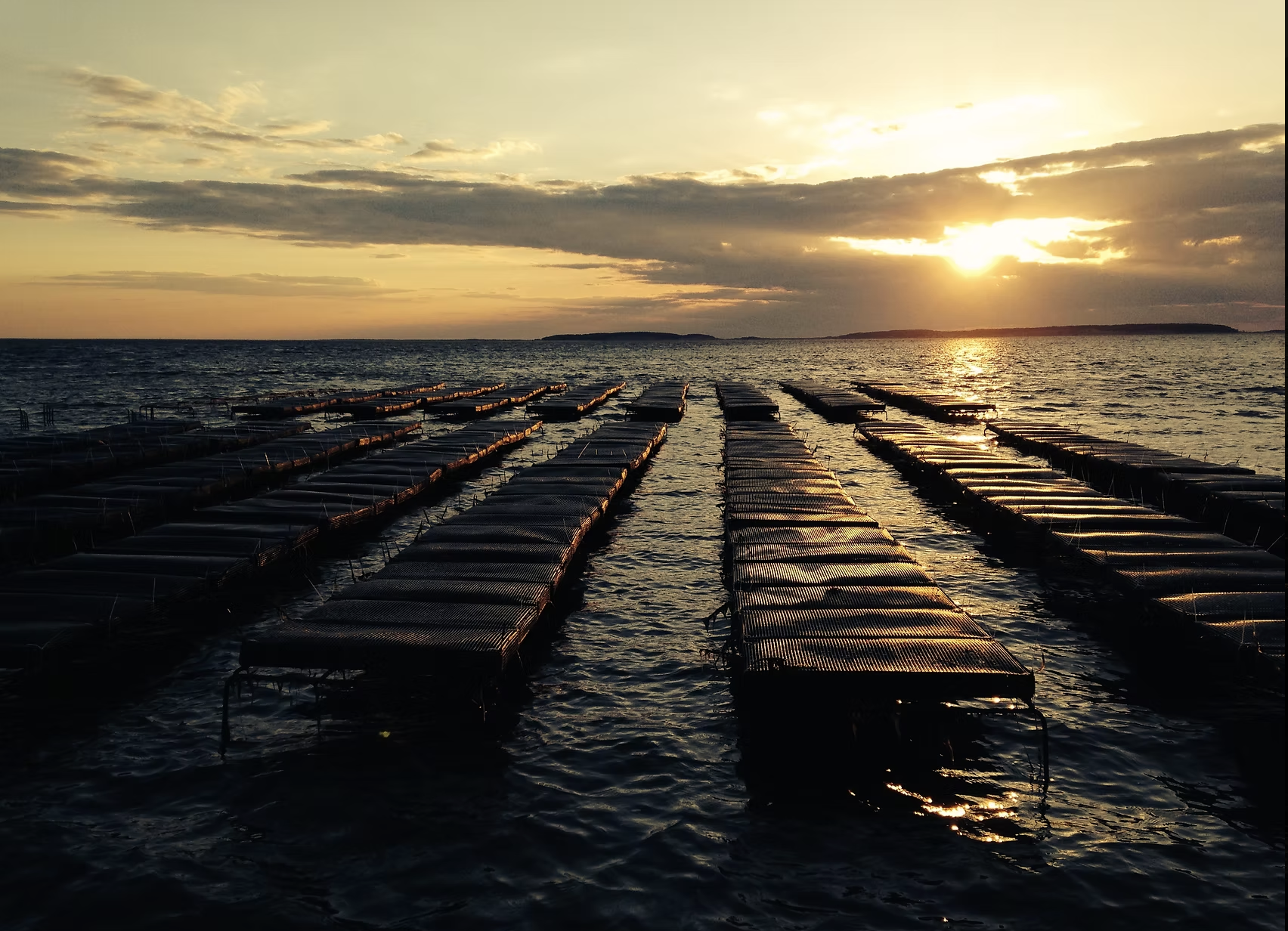
Field Point Oyster Farm
When Samuel de Champlain sailed into Wellfleet Harbor in 1606, he didn't name it for its sandbars or its tides. He named it Port aux Huitres — Port of Oysters. Four hundred years later, the harbor still earns that name.
Wellfleet is one of the few places in the world where oysters thrive with almost no help. The harbor's cold water, strong tidal exchange, and nutrient-rich bottom create conditions that are difficult to replicate anywhere else. The result is an oyster with a clean, briny flavor and a firm texture that's been shipped to Boston, New York, and beyond since the 17th century. During the Civil War, Wellfleet oysters were canned and used as provisions for the Union Army. A few were individually wrapped in copper wire and sent to England for the coronation of King George V.
Today, Wellfleet oversees close to one hundred shellfish farms — more than any other town in Massachusetts. Those farms are spread across the harbor flats, working with the same tidal rhythms that have shaped this place for centuries.
What You See from the Water
The farms are visible from a boat in a way they simply aren't from shore. Rows of cages stretch across the flats at low tide. Farmers work in waders, moving between gear as the water drops. The scale of the operation becomes clear from out on the harbor — this isn't a boutique industry. It's a working waterway.
The tidal window matters here. Farmers typically have about three hours at low tide to do what needs doing before the water rises again. The schedule shifts by roughly an hour each day. No two mornings are alike.
Some farms sit near the mouth of the Herring River. Others are spread across the inner harbor flats closer to town. From the water, you can read the harbor by where the gear is — the farms cluster around the most productive ground, and that ground shifts over time as sand moves and channels adjust.
Why the Oysters Taste Like This
Oysters take on the character of the water they grow in — a quality sometimes called merroir, the sea equivalent of terroir in wine. Wellfleet's combination of cold Cape Cod Bay water, strong tides, and clean sandy bottom produces an oyster that's consistently distinct: firm, briny, with a clean finish. The harbor does most of the work. The farmers manage the rest.
The Oyster Talk
The Packet Boat offers an Oyster Talk — a harbor crossing that focuses on the farms, the history, and the water conditions that make Wellfleet oysters what they are. It's a chance to see the harbor from the same angle the farmers work it, with context for what you're looking at.
If you've eaten a Wellfleet oyster, this is where it came from.