The Horseshoe Crabs of Wellfleet: Ancient Mariners of Cape Cod Bay
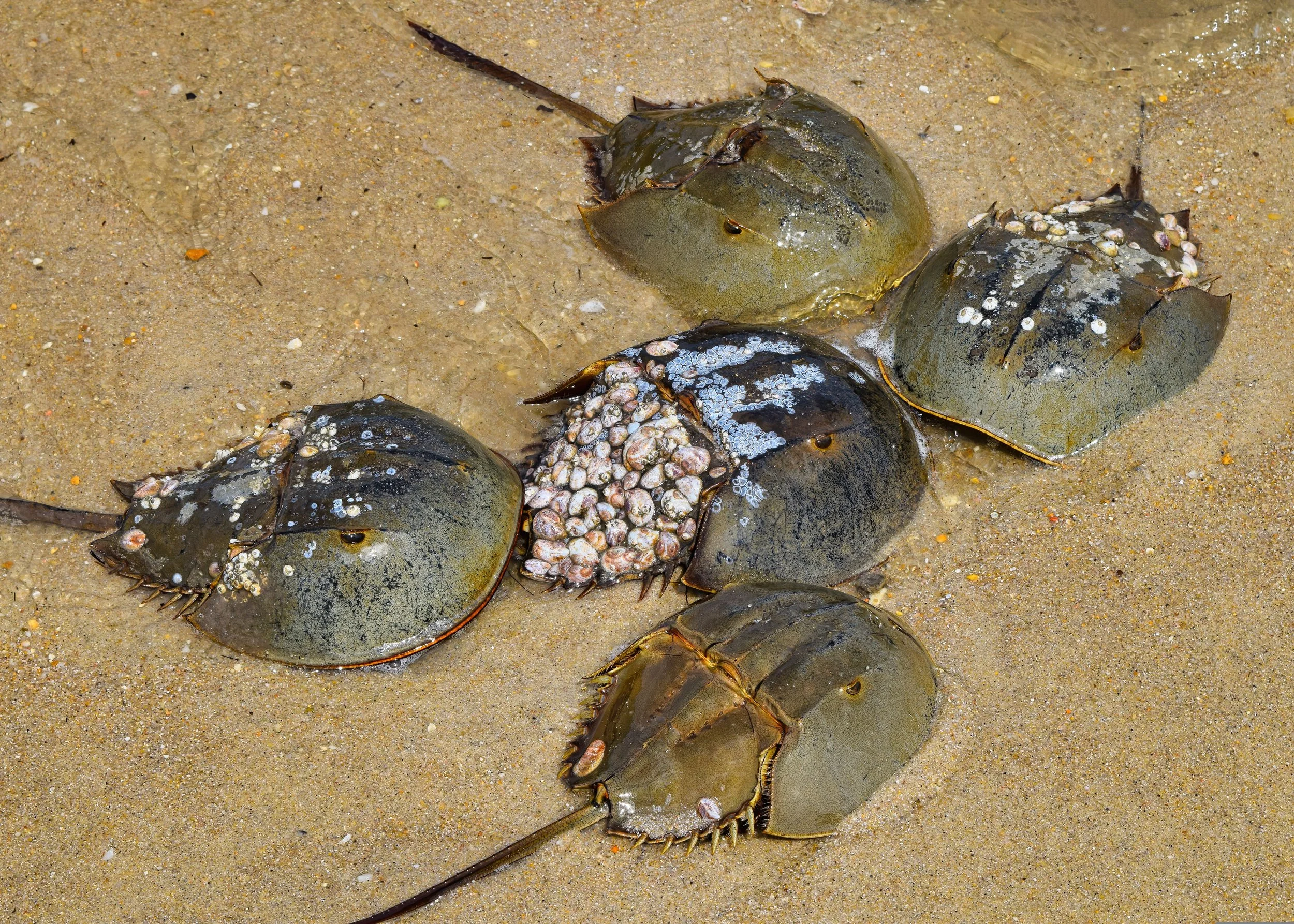
Atlantic horseshoe crabs gather on a Wellfleet tidal flat during their annual spring spawning season.
Every spring, thousands of horseshoe crabs emerge onto the tidal flats around Wellfleet to continue a ritual that has remained almost unchanged for hundreds of millions of years. Older than the dinosaurs, these remarkable creatures are one of Cape Cod Bay's oldest—and most fascinating—seasonal visitors.
Older Than the Dinosaurs
Despite their name, horseshoe crabs aren't true crabs. They're more closely related to spiders and scorpions and have existed for more than 445 million years. Scientists often call them living fossils because their appearance has changed very little over that immense span of time.
Walking the flats in Wellfleet, it's possible to encounter an animal whose ancestors were here long before Cape Cod itself existed.
Spring on the Tidal Flats
From May through June, horseshoe crabs gather along the sandy shallows of Cape Cod Bay to spawn during the highest tides.
A single female may lay tens of thousands of eggs, creating an important food source for migrating shorebirds like the red knot. The annual arrival of horseshoe crabs is one of the quiet events that helps sustain the larger coastal ecosystem.
Blue Blood That Saves Lives
One of the most remarkable things about horseshoe crabs is their bright blue blood.
Scientists have long used it to test vaccines, IV medications, and medical equipment for harmful bacterial contamination. Today, synthetic alternatives are helping reduce the need to collect blood from wild horseshoe crabs while maintaining the same medical safety standards.
Look, But Leave Them Be
If you find what looks like a horseshoe crab on the beach, it may simply be a hollow shell left behind after molting.
If you see a live animal, admire it where it is and never lift it by its tail. The tail, or telson, isn't a stinger—it's a tool the animal uses to flip itself upright if waves turn it over.
Watching from a respectful distance helps ensure these ancient mariners continue returning to Wellfleet each spring.
Captain's Note
During late spring, it's common to spot horseshoe crab shells scattered across the tidal flats as the tide recedes. They're easy to overlook, but once you know their story, they become one of the most remarkable signs that spring has arrived on Cape Cod Bay. On calm mornings, they're a quiet reminder that these waters have supported life for hundreds of millions of years.